
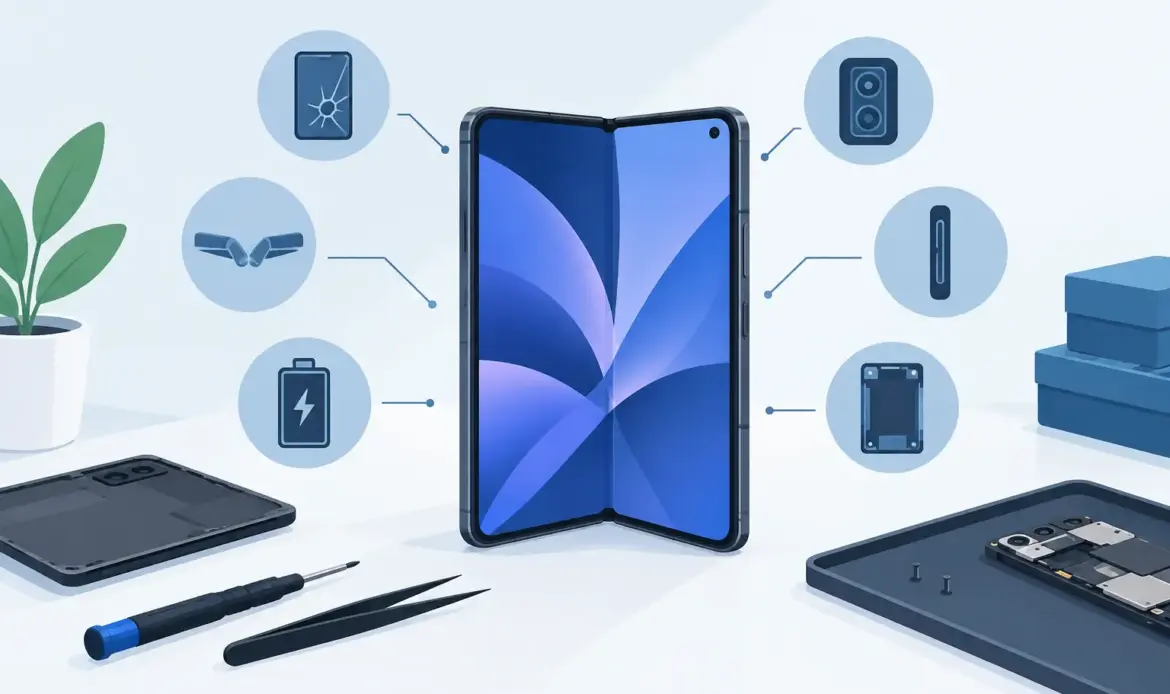
A foldable phone is a powerful piece of technology until it will not open smoothly, the inner screen starts flickering, or a black line appears along the crease. These devices can handle work, school, photos, games, and family life in one compact package, so a failure feels urgent. Foldable phone repair is not the same as replacing a standard phone screen. It takes careful diagnosis, the right replacement parts, and a technician who understands the moving components inside the device.
When your foldable is damaged, the goal should not be to guess, force it open, or cover a serious issue with a temporary fix. The goal is to protect the device, your data, and your budget while getting clear answers about what can realistically be restored.
Why Foldable Phone Repair Is Different
A traditional smartphone has one fixed display, a frame, and a protective glass layer. A foldable phone has those basics plus an ultra-thin flexible display, an internal support layer, display cables that move with the phone, and a precision hinge designed to open and close thousands of times.
That engineering makes foldables impressive, but it also means one symptom can have several possible causes. A screen that goes dark when the phone opens may point to display damage, a stressed flex cable, or a hinge problem. A phone that will not close flat may have debris in the hinge, physical damage after a drop, or a worn internal hinge assembly.
The repair approach depends on the model and the damage. In some cases, a screen assembly replacement is the correct solution. In others, the hinge or frame may need attention before a new screen can safely do its job. A proper diagnosis matters because replacing only the visibly damaged part is not always enough.
Common Foldable Phone Problems We See
The inner display gets most of the attention, and for good reason. It is the most delicate part of many foldable devices. Still, it is not the only component that can stop your phone from working the way it should.
Inner Screen Damage and Crease Failures
A bright line, dead pixels, black blotches, flashing, touch issues, or a display that is blank on one side can signal internal screen damage. Sometimes the outer surface looks nearly perfect even though the flexible panel underneath has failed.
A crease can become more noticeable over time, but a crease alone does not always mean the screen needs replacement. The concern rises when the crease is paired with lifting layers, cracking sounds, loss of touch response, discoloration, or a line across the display. Do not press hard on the crease or attempt to flatten it yourself. That can turn a repairable problem into a larger display failure.
Hinge Trouble
A healthy hinge should feel controlled and consistent. If your phone suddenly opens only partway, makes grinding or popping sounds, closes unevenly, or will not stay open, stop forcing it. Dirt, pocket lint, a drop, or internal wear can interfere with a hinge mechanism.
Hinge damage can also affect the screen over time. When the device no longer folds along its intended path, extra stress may be placed on the display and internal cables. Getting it checked early can help prevent more expensive damage later.
Outer Screen, Back Glass, and Frame Damage
Foldables still face the everyday accidents that damage any phone: a cracked cover screen, shattered back glass, bent frame, failing charging port, weak battery, or water exposure. These repairs may be more straightforward than inner-display work, but the phone’s foldable design still calls for careful disassembly and reassembly.
A bent frame deserves special attention. Even a small alignment issue can change how the two halves meet when folded. Before any screen replacement, a technician should inspect the frame and hinge area so the repaired device is not placed under unnecessary stress.
Battery, Charging, and Power Issues
If a foldable phone drains unusually fast, becomes hot, will not charge reliably, or shuts down at an unexpected percentage, the cause could be the battery, charging port, charging circuit, software, or even damage from a previous drop. Because many foldables use tightly arranged internal components, this is not a repair to handle with a random online toolkit.
A diagnostic should identify whether a replacement battery or charging-port repair makes sense. If there is corrosion from moisture or a board-level issue, more advanced micro-soldering work may be needed.
What to Do Before You Bring It In
A little care between the accident and the repair counter can make a real difference. If the phone still works, back up your photos, messages, files, and authentication information as soon as possible. Damage can worsen without warning, especially if the display begins flickering or the hinge is binding.
Then power the device down if you see heat, swelling, smoke, a strong chemical smell, moisture under the screen, or exposed internal parts. Do not charge a phone that may have liquid damage or a swollen battery. Keep it dry, place it on a nonflammable surface, and have it inspected promptly.
For less severe damage, avoid repeatedly opening and closing the phone to test it. Avoid tape over a damaged inner screen, household glue around a lifted screen layer, and sharp tools used to remove a screen protector. Those quick fixes often create more work and more risk.
When you arrive for service, explain what happened and when the symptoms started. Mention drops, moisture, overheating, charging trouble, or whether the phone fails in a certain open or closed position. Those details help speed up diagnosis.
Can Every Foldable Phone Be Repaired?
Not every foldable repair has the same answer. Parts availability, model age, extent of damage, and the condition of the hinge and frame all affect the repair decision. A newer device with a damaged inner display may be a strong repair candidate, particularly when the rest of the phone is working well. A device with heavy frame damage, water corrosion, and a failed display may need a more detailed cost comparison.
That does not mean replacement is automatically the better move. A quality repair can extend the useful life of a phone you already know, keep your files and apps in place, and cost less than purchasing another premium device. The right choice comes down to a clear diagnosis and an honest quote, not pressure.
At Phone-Medics, foldable devices are treated like the precision equipment they are. Our technicians inspect the full picture, from the display and hinge to charging performance and internal damage, before recommending a repair path. You deserve to know what failed, what the repair involves, and whether it is worth moving forward.
Why Professional Repair Protects Your Investment
Foldable phone repair is not a good match for improvised home repairs. Flexible screens are thin, adhesives are specific, screws and brackets are tiny, and the internal layout leaves little room for error. A damaged cable, misaligned hinge component, or low-quality screen can leave you with a device that works briefly but fails again when folded.
Professional service brings the value of experienced handling, precision tools, and high-quality replacement parts. It also gives you a real person to talk to when the repair decision is not simple. That matters when your phone contains work contacts, school assignments, family photos, banking access, and the details that keep your household moving.
Get Clear Answers Before the Damage Spreads
A foldable phone does not have to become unusable because of a flickering screen, stubborn hinge, or charging failure. The earlier you address the problem, the better the chance of limiting additional damage. Bring your device in for a professional diagnosis, ask questions, and choose the repair based on facts rather than frustration. Your phone has a lot of life left to protect.