
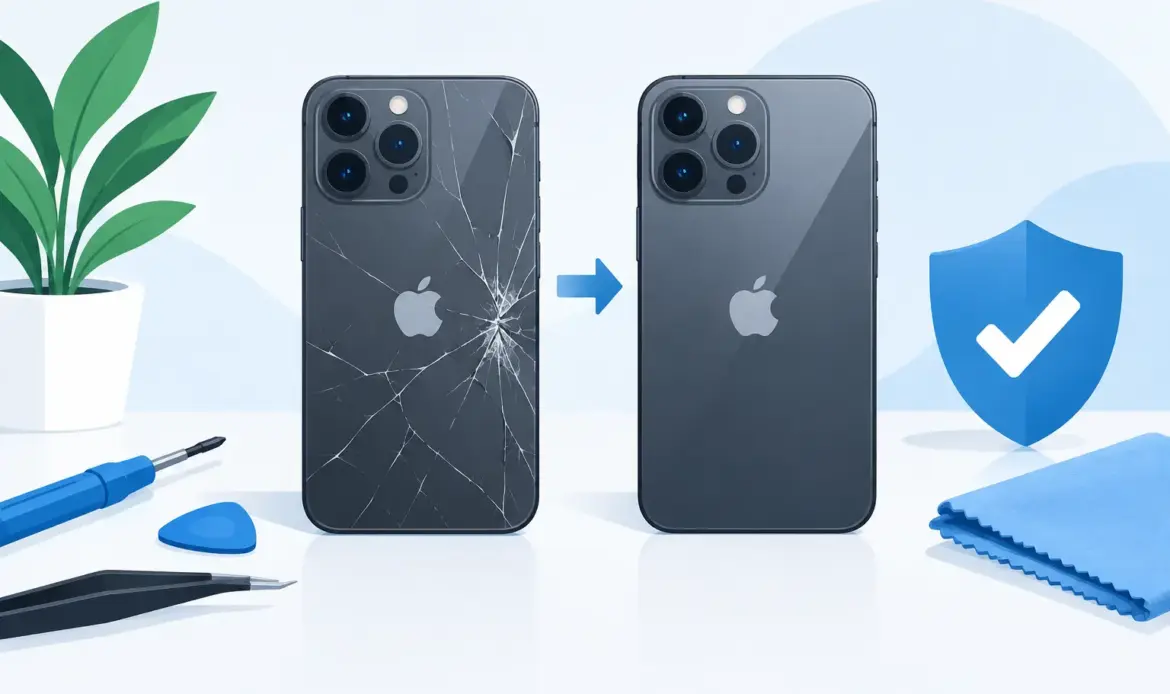
That spiderweb crack across the back of your iPhone may look cosmetic, but it can quickly become a bigger problem. Sharp glass can cut your hand, tiny fragments can keep breaking away, and a hard impact that shattered the rear panel may have affected more than the surface. iPhone back glass repair gives your device a second chance without forcing you to replace a phone that still does everything you need.
For Metro Detroit families, students, professionals, and small-business owners, a working phone is not optional. It handles calls, schedules, payments, photos, schoolwork, and directions. When the back glass breaks, the right move depends on your iPhone model, the condition of the rest of the device, and whether the damage has reached the camera, frame, battery, or wireless charging components.
Why a Cracked Back Panel Deserves Attention
The glass back on many modern iPhones supports wireless charging and helps create the clean, durable finish people expect. It is tough, but it is still glass. One unlucky drop onto concrete, tile, or a vehicle parking lot can leave it shattered.
A few small cracks do not always stop the phone from turning on. That can make it tempting to put a case over the damage and move on. Sometimes that is a reasonable short-term choice. But when glass is missing, cracks run near the camera housing, or the phone feels loose or bent, it is time for a professional diagnosis.
Damage around the camera lenses can affect photo quality or leave the lens area exposed to dust. A damaged rear housing can also make the phone less comfortable to hold and more likely to suffer another drop. If the impact caused the back glass to break, it is smart to check for weak wireless charging, battery drain, camera shake, or a frame that no longer sits flat.
What iPhone Back Glass Repair Involves
Back glass repair is not the same as placing a new screen protector on the phone. The broken glass is bonded to the phone’s housing, often near sensitive components. A technician must remove the damaged material carefully, prepare the surface correctly, and install a high-quality replacement that fits the specific model.
The repair process varies by iPhone generation. Some models allow a more direct rear-system repair, while others require precise removal of bonded glass from the existing housing. The technician’s job is to protect the camera assembly, wireless charging hardware, buttons, internal cables, and frame while removing every dangerous fragment.
That is why repair quality matters. Rushing the job or using the wrong tools can damage nearby components, leave sharp edges behind, or create a poor fit that looks rough and collects debris. Certified technicians use controlled techniques and inspect the phone before and after repair so the rescue does not create a new problem.
When Repair Makes More Sense Than Replacement
If your iPhone has a cracked back but the screen, cameras, charging port, buttons, and battery are working well, repair is often the sensible value move. You keep the phone you know, avoid the cost of a replacement device, and get back to normal without moving data, resetting apps, or dealing with a new payment plan.
Repair can be especially worthwhile when the phone is only a few generations old and still receives the features and performance you need. A high-quality back glass repair can restore the appearance and safe handling of a phone that is otherwise in great shape.
There are times when replacement deserves consideration. If the phone has major frame damage, repeated water exposure, failing cameras, a swollen battery, or several expensive issues at once, a technician may recommend comparing repair costs with replacement value. Honest advice should account for the whole device, not just the visible crack.
A good diagnosis protects your budget. The goal is not to push a repair at any cost. It is to determine whether your iPhone can be restored reliably and whether that repair makes sense for how you use it.
What Affects the Cost and Turnaround Time?
There is no one-price answer for every cracked iPhone. Model, extent of damage, part availability, and related issues all affect the quote. A clean break limited to the rear glass is different from a phone with a bent frame, broken camera lens, or damage to the wireless charging system.
The newest and more complex iPhone models may require additional time and specialized procedures. Older models may have different parts and repair methods. That is why a hands-on inspection is more useful than a guess based on a photo alone.
When requesting a quote, share your exact iPhone model and explain what happened. Mention whether the camera still focuses, whether wireless charging works, and whether the device gets hot, drains unusually fast, or has started separating at the edges. Those details help a technician prepare for the real repair, not just the obvious one.
Do Not Ignore These Warning Signs
A cracked back is urgent when it comes with signs of internal damage. Stop using the phone and seek help promptly if you notice a battery that is swelling, a burning smell, excess heat, smoke, or a back panel that is lifting away from the frame. Do not press the glass down or try to puncture anything.
You should also get the device checked if the rear camera has trouble focusing, the flash no longer works, wireless charging has become unreliable, or the phone was exposed to water after the glass broke. Cracks can compromise the device’s original resistance to dust and moisture, even when the phone appears to work normally.
Until it is repaired, use a protective case to contain loose pieces and avoid putting the phone in a pocket or bag where fragments can spread. Clear tape can help temporarily cover a small cracked area, but it is not a repair and should never be used over a hot or swollen device.
Why DIY Back Glass Removal Can Go Wrong
Online repair videos can make rear-glass removal look straightforward. What they often skip is the risk. Heat, blades, solvents, and aggressive prying can harm the battery, camera, charging coil, flex cables, or outer frame. A small slip can turn a cosmetic repair into a much larger rescue.
Replacement parts are another concern. A poor-fitting rear panel may not sit flush, may interfere with wireless charging, or may leave gaps around the camera area. Cheap materials can also look noticeably different from the original finish.
For people who repair electronics professionally and have the correct tools, DIY may be an informed choice. For most device owners, professional repair is the safer path. The savings from a do-it-yourself attempt can disappear quickly if the battery or internal components are damaged along the way.
Protect Your Phone After the Repair
Once the back glass is restored, a quality case is one of the best defenses against the next drop. Choose one with raised edges around the camera and enough grip to prevent slips. If you use magnetic accessories or wireless charging, make sure the case is designed to work with them.
It also helps to take a quick look at your charging habits. Avoid leaving your phone in extreme heat, especially in a car, and replace damaged charging cables. Heat and repeated impacts are hard on batteries and internal connections, even when the exterior looks fine.
At Phone-Medics, every device starts with the same priority: protect what matters to you. A cracked iPhone does not have to become a replacement emergency. Bring it in for a clear diagnosis, quality repair options, and the careful hands needed to bring your phone back to life.