
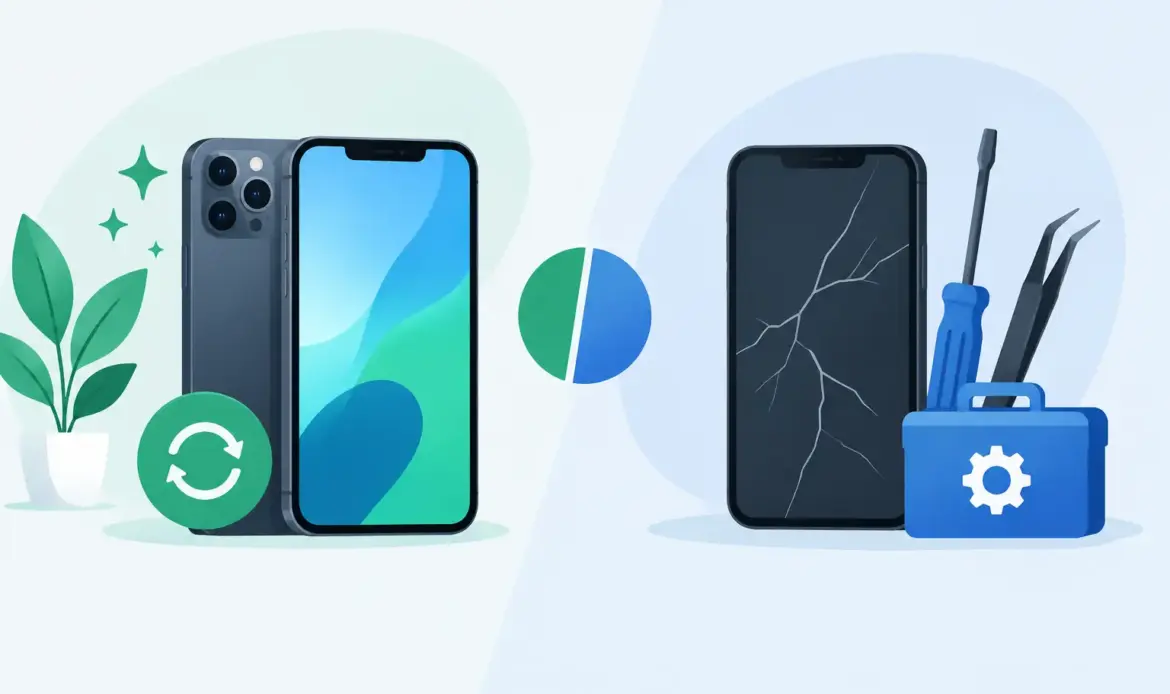
A cracked phone screen rarely happens at a convenient time. Neither does a laptop that stops charging before a deadline or a game console that quits halfway through a weekend. When replacement starts sounding easier, the refurbished device versus repair service decision comes down to more than the sticker price. You need to know what failed, what can be saved, and whether the next device will truly be a better deal.
A refurbished device can be a smart purchase. So can a professional repair. The right answer depends on your device’s condition, its age, your budget, and how much you rely on the information already inside it.
Refurbished Device Versus Repair Service: Start With the Damage
The first question is not, “What is the newest option?” It is, “What is actually wrong with my device?” A broken screen, tired battery, damaged charging port, or failed speaker often has a clear repair path. These problems can make a device feel finished even when the core hardware is still healthy.
A professional diagnosis separates a straightforward repair from a deeper failure. For example, a phone that will not charge may need a charging port replacement, but it could also have debris in the port, battery trouble, or board-level damage. A laptop that will not power on could have a failed battery or charger, or it may require component-level work. Guessing can lead to buying a replacement when a precise repair would have brought your device back to life.
Water damage deserves special attention. Do not keep charging or powering on a wet device in hopes it will recover. Internal corrosion can spread after the initial accident. Quick professional inspection gives you the best chance of saving the device and, just as importantly, the photos, files, and accounts tied to it.
When Repair Is Usually the Better Rescue
Repair is often the strongest value when the device is still meeting your needs aside from one or two specific problems. If your phone runs the apps you use, your tablet is fast enough for school, or your console still plays reliably, replacing a damaged part may cost far less than changing devices.
A repair also lets you keep what is familiar. Your files, settings, accessories, case, and daily routine stay in place. That matters for busy parents coordinating family schedules, professionals using authentication apps, students with class materials, and small-business owners who cannot afford downtime.
Battery replacement is a common example. A device that dies by lunchtime can feel obsolete, but battery wear is normal. Replacing a depleted battery can restore dependable all-day use without the cost and setup work of a different phone or laptop.
Screen repairs offer similar value. A shattered display is frustrating and can worsen over time, but it does not automatically mean the device is beyond saving. High-quality replacement parts and careful installation can restore visibility, touch response, and confidence in using the device again.
Repair is also the practical choice when your device holds data that has not been backed up. A refurbished replacement may solve the hardware problem, but it does not automatically recover the photos, messages, documents, or game saves left behind on the damaged device.
When a Refurbished Device Makes More Sense
There are times when replacement is the smarter move. If a device has repeated major failures, severe board damage, an outdated operating system, or repair costs close to the value of a comparable replacement, a refurbished device can offer a fresh start at a lower price than buying new.
A refurbished option may also make sense when your needs have changed. A student who now needs a laptop capable of running demanding software, a remote worker who needs better video-call performance, or a gamer who wants compatibility with newer titles may benefit more from upgrading than repairing older hardware.
Still, not every refurbished device is equal. “Refurbished” can mean anything from professionally inspected and tested to lightly cleaned and resold. Before purchasing, ask about the device’s condition, battery health, included accessories, return policy, warranty coverage, and whether the device is unlocked and compatible with your carrier. A low price loses its appeal if you discover hidden wear, weak battery life, or limited support a few weeks later.
For phones in particular, confirm that the model will continue receiving security updates and that its storage capacity fits your needs. Saving money on a device with too little storage or limited future support can create another replacement decision sooner than expected.
Compare the Full Cost, Not Just the First Number
The price of a repair quote and the price tag on a refurbished device are only the beginning. With a replacement, you may also need a case, screen protector, charger, adapter, data transfer help, or a new accessory that matches a changed port. You may spend time setting up banking apps, passwords, work tools, parental controls, and two-factor authentication again.
With a repair, consider the remaining condition of the device. If a phone needs a screen today but also has a failing battery and poor storage capacity, a repair may only delay a larger problem. On the other hand, if the phone is otherwise reliable and supported, fixing the screen can be the cost-effective rescue.
A useful rule is to compare the repair cost against the total cost of a refurbished replacement in similar condition. Then consider how long each option is likely to serve you. A repair that gives you another year or two of dependable use may be a better value than a cheap replacement with unknown history. A refurbished device with a solid warranty may be the better call when your current device has several costly issues at once.
Why Professional Diagnosis Changes the Decision
The best decision is based on facts, not panic after an accident. Certified technicians can inspect the device, identify the true cause of the failure, and explain whether repair is practical. That is especially valuable for charging failures, liquid damage, motherboard faults, and devices that have already been repaired elsewhere.
Advanced micro-soldering can sometimes save electronics that would otherwise be written off. Not every board-level repair is worthwhile, but it can be the difference between losing a device and restoring one with valuable data or a higher replacement cost. An honest diagnosis should include both possibilities: when repair is a good investment and when it is time to move on.
At Phone-Medics, that rescue-first approach means looking for the repair that protects your budget and your device, not pushing a one-size-fits-all answer. Quality parts, precise diagnosis, and careful handling matter because your phone, computer, tablet, or console is part of your daily life.
A Quick Way to Make the Call
Choose repair when the damage is isolated, the device still performs well, and the repair cost is clearly below the cost of a comparable replacement. Choose a refurbished device when your current tech has multiple serious problems, can no longer support what you need, or would require repairs that do not make financial sense.
If you are stuck between the two, bring in the damaged device before buying anything. A clear diagnosis can turn a stressful replacement decision into a simple repair, and if replacement truly is the better path, you will know you made that call with your eyes open.