
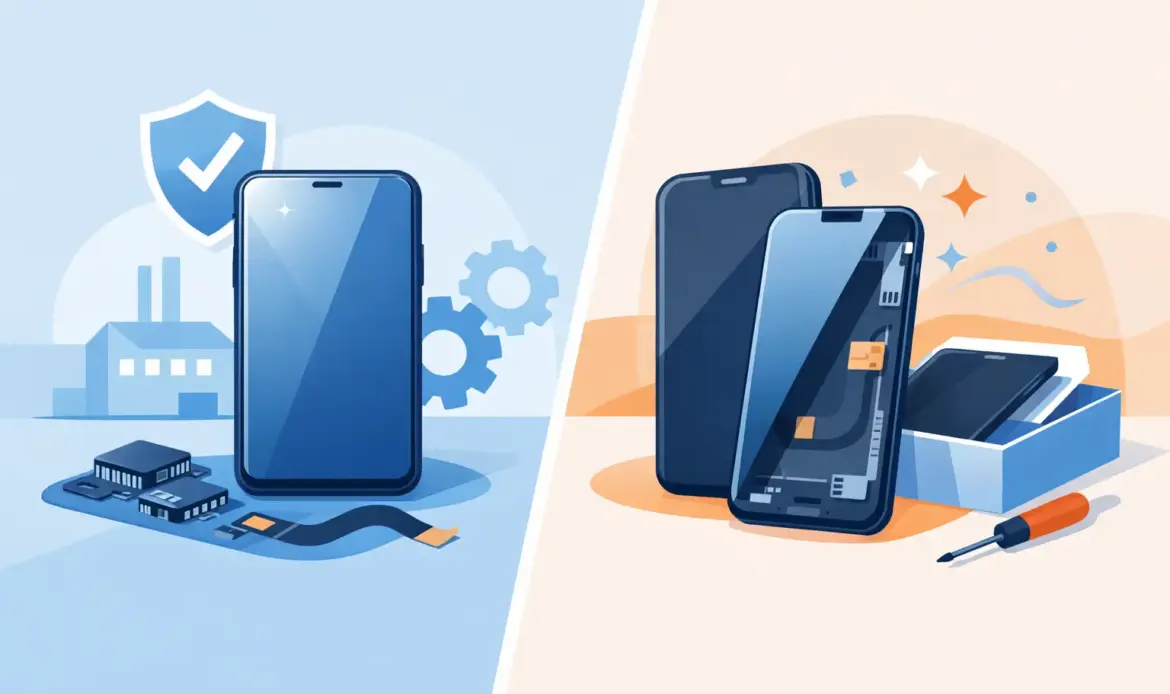
A cracked screen is more than a cosmetic problem when your phone is your alarm clock, work line, camera, map, and connection to family. When comparing OEM versus aftermarket screens, the right answer is not always the most expensive part or the lowest quote. It is the screen that restores the features you rely on, fits your budget, and is installed with the care your device deserves.
At Phone-Medics, we treat every damaged device like it has an urgent job to get back to. A certified technician can help you understand your options before the repair begins, so you are not left guessing what was installed or why it costs what it does.
What OEM and aftermarket screens actually mean
OEM stands for Original Equipment Manufacturer. In plain language, an OEM screen is made by, or made to the specifications of, the company that built the phone. Depending on the device and repair channel, that may mean a genuine new service part, a manufacturer-authorized part, or an original screen removed from another device. These are not always the same thing, so the wording matters.
An aftermarket screen is produced by a third-party manufacturer rather than the original phone maker. Aftermarket does not automatically mean poor quality. There are budget-grade parts, high-quality premium parts, and everything in between. The difference is that the original device manufacturer did not produce or brand the part.
That is why a smart repair conversation goes beyond asking, “Is it OEM?” Ask whether the screen is new or refurbished, whether it is OLED or LCD, what functions are expected to work, and what warranty comes with the repair.
OEM versus aftermarket screens: the differences you can feel
The display is one of the most personal parts of your phone. You look at it for hours, tap it hundreds of times, and may depend on it outdoors, in the car, at school, or on a job site. Screen quality shows up in several ways.
Display color, brightness, and black levels
OEM displays are generally built to match the phone’s original color calibration, brightness range, and contrast. On an OLED phone, a genuine-quality OLED screen can deliver deep blacks because individual pixels turn off completely. It can also preserve the smooth appearance and color balance you remember from the original display.
Aftermarket quality varies more widely. A premium aftermarket OLED can look very close to the original in normal use. A lower-cost replacement may appear cooler or warmer, dimmer in direct sunlight, or less consistent at low brightness. Some lower-priced replacements use LCD technology for phones originally designed with OLED. They can restore basic function, but the display may be thicker, use more battery power, and show grayish blacks instead of true black.
For a backup phone, a child’s device, or a phone nearing the end of its useful life, that trade-off can be completely reasonable. For someone editing photos, gaming, watching video, or working from a phone all day, display quality may be worth paying more for.
Touch response and fit
A screen is not just glass. It includes the display panel, touch digitizer, flex cables, and often sensors that communicate with the phone’s logic board. High-quality parts should register taps, swipes, typing, and edge touches accurately.
OEM parts typically offer the closest fit and feel because they were designed around the original frame and components. Better aftermarket parts can also fit well when installed correctly, but cheaper panels may have slightly different bezels, a less natural touch feel, or more noticeable gaps around the frame.
The installation matters as much as the part. A skilled repair technician removes broken glass carefully, checks the frame for bends, transfers required components, replaces adhesive, and tests the screen before returning the device. A great screen installed poorly is still a bad repair.
Features and device messages
Modern phones often pair the display with software and security features. Depending on the brand and model, a replacement screen may affect automatic brightness, color-adjustment features, fingerprint sensors, face recognition components, refresh-rate behavior, or display warnings in the settings menu.
Some functions can be preserved through proper part transfer, calibration, or programming. Others depend on the exact phone model, its software version, and the type of replacement part used. This is especially relevant on newer iPhones, Samsung Galaxy devices, and foldable phones.
Do not assume a warning message means the screen is unsafe or unusable. It may simply mean the phone recognizes that a component was replaced. Still, it deserves an honest explanation before you authorize a repair. Your technician should tell you what to expect, not surprise you after the fact.
When an OEM screen makes the most sense
OEM is usually the strongest choice when your phone is newer, high-value, or central to your work and daily life. If you need the closest possible match in color, brightness, fit, touch response, and original features, genuine or manufacturer-spec parts are often worth the added cost.
It can also be the right route if your device is still under a manufacturer warranty, has insurance requirements, or you plan to sell or trade it in soon. Original-quality parts may help preserve the experience buyers expect, although trade-in policies can vary.
For flagship phones with OLED displays, an OEM option is especially appealing. These devices were built around advanced panels, and a lower-tier replacement can make an otherwise excellent phone feel noticeably different. If you paid for a premium screen the first time, protecting that experience can be a sensible investment.
When aftermarket is the practical rescue
Aftermarket screens make sense when controlling repair cost is the priority and the phone still has plenty of life left. A quality aftermarket part can bring a cracked, unusable phone back to life for less than an OEM replacement, saving you from the much larger expense of buying a new device.
This option is often practical for older models, secondary devices, family phones, and situations where basic daily performance matters more than perfect factory-level color. It can also be a good choice when the difference in price helps you repair a phone now instead of waiting with broken glass, missed calls, and a screen that could fail completely.
The key word is quality. The aftermarket market is broad, so a quote should not be judged on price alone. A reputable local repair shop stands behind the part and labor, tests the device, and gives you a clear answer about the grade of screen being used.
Questions to ask before approving a screen repair
A trustworthy repair provider should welcome questions. Before your phone goes on the repair bench, ask whether the replacement is OEM, manufacturer-authorized, refurbished original, premium aftermarket, or standard aftermarket. Those labels help you compare options fairly.
Also ask whether the replacement matches the original display technology. If your phone came with OLED, find out whether the quoted part is OLED or LCD. Ask what warranty covers the part and workmanship, whether any features may be affected, and how long the repair is expected to take.
Finally, ask whether the technician will inspect the frame and test the phone after the repair. A hard drop can damage more than the visible glass. Bent housing, weak charging, camera problems, or battery damage may need attention before a new screen can sit correctly and perform reliably.
The cheapest screen is not always the best value
A low repair price can be tempting when your screen is shattered. But if the display is dim, touch input misses taps, the fit is poor, or the part fails soon after installation, that bargain turns into a second repair bill.
Value comes from the full rescue: a part appropriate for your device, precise installation, transparent expectations, and warranty support if something goes wrong. The best choice may be a premium aftermarket screen for one customer and an OEM screen for another. Your phone model, how you use it, its age, and your budget all belong in the decision.
Before you live with cracked glass or rush into a replacement you do not understand, get a clear diagnosis and a straight answer on your screen options. The right repair should make your phone feel dependable again, so it is ready for the calls, messages, work, and everyday moments waiting on the other side of the glass.